What Is IPTV and How Does It Work?
Learn what IPTV means, how IPTV works, what you need to use it, which devices support it, and how it compares with traditional television.
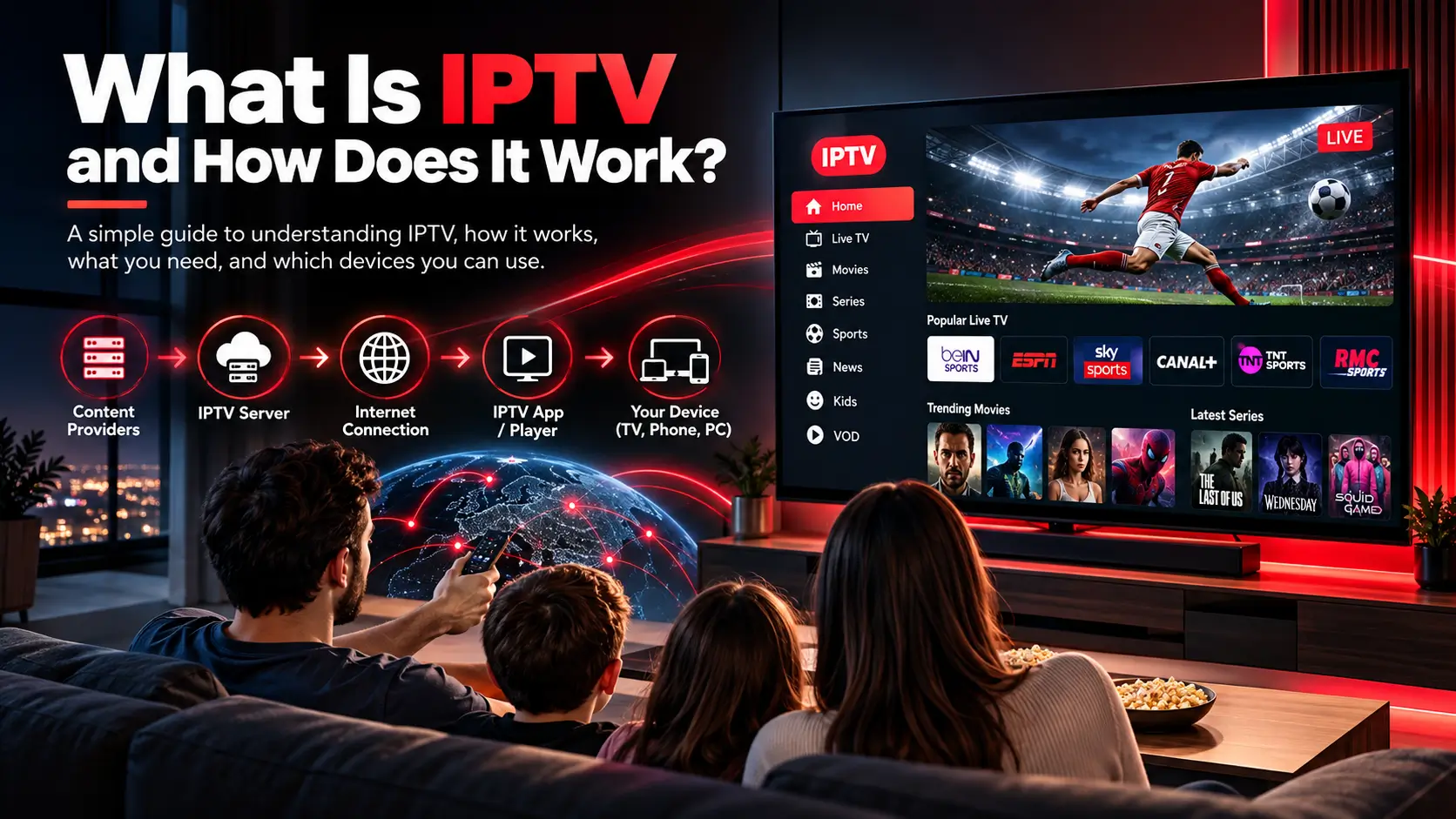
Quick Answer: What Is IPTV?
What Is IPTV? IPTV stands for Internet Protocol Television. Instead of receiving television channels through traditional broadcast, satellite, or cable systems, IPTV delivers video content through an internet connection.
Depending on the service, IPTV can provide live television, video-on-demand content, and other streaming options on compatible devices.
01. What Is IPTV?
So, what is IPTV in simple terms? IPTV is a method of delivering television and video content using Internet Protocol networks. The same basic internet infrastructure used for websites and online services can also be used to deliver video streams.
Traditional television often depends on satellite signals, cable networks, or terrestrial broadcasting. IPTV instead uses an internet connection to send requested video data to a compatible application or device.
This makes IPTV flexible because viewers can access content through several different types of connected devices rather than being limited to one traditional television delivery method.
02. How Does IPTV Work?
Understanding what is IPTV becomes easier when you look at how the streaming process works. When you select a channel or video, the IPTV platform processes your request and delivers the relevant stream through the internet.
The general process can be simplified into several stages:
Content Source
Television channels or video content are prepared for digital streaming.
IPTV Server
The content is processed and made available through a streaming platform.
Internet Connection
Video data travels through the internet to the viewer’s connected device.
Streaming App
A compatible IPTV application receives the stream and displays the content.
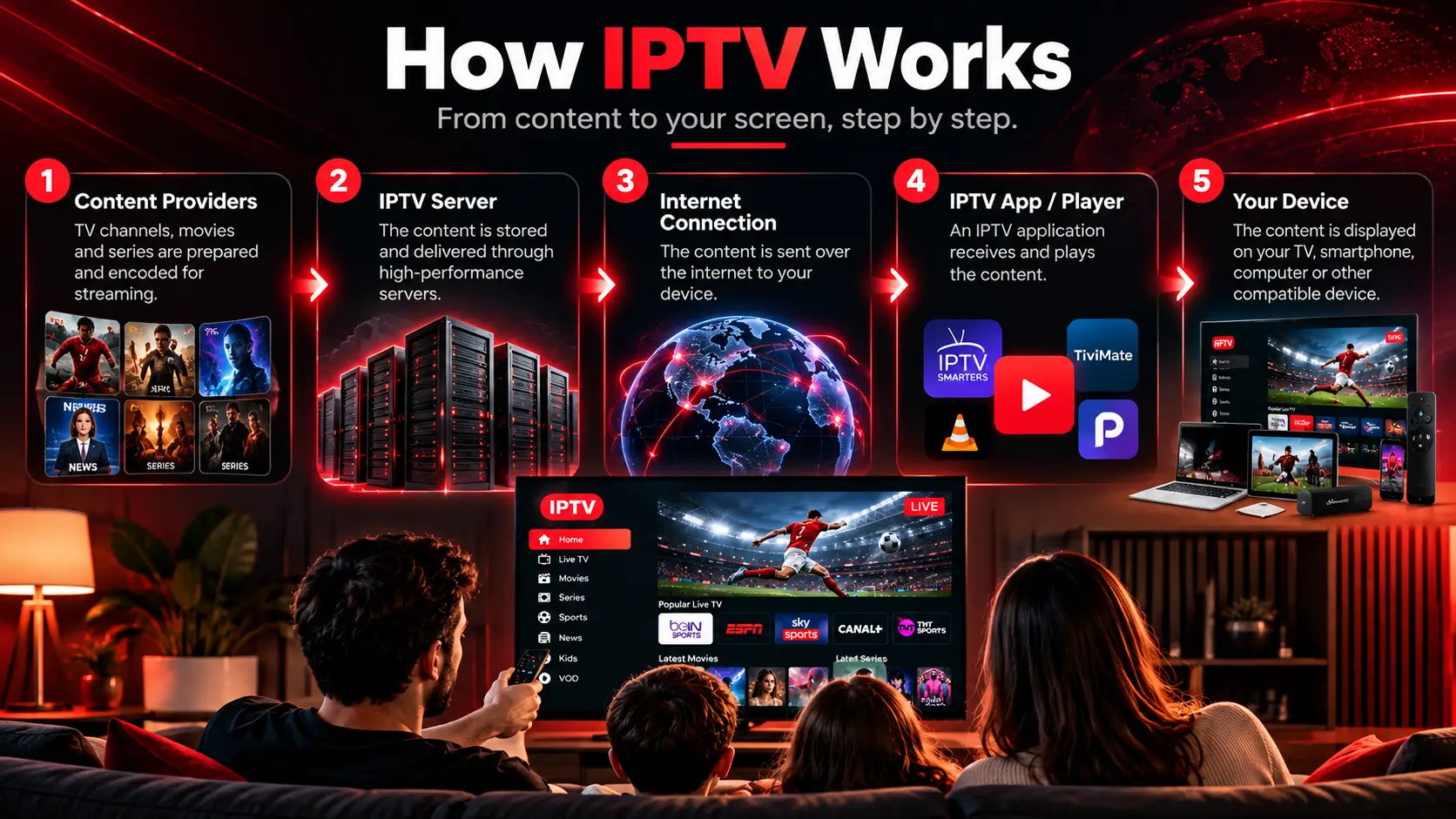
The quality of the experience can depend on several factors, including internet speed, network stability, device performance, application quality, and the streaming source.
Ready to Explore IPTV?
If you understand what IPTV is and want to explore available subscription options, visit our IPTV subscription page to learn more.
03. What Can You Watch With IPTV?
Depending on the IPTV service and package, viewers may have access to different types of content. IPTV platforms can support both live and on-demand viewing.
Live TV
Watch available television channels through an internet connection.
Video on Demand
Access movies, shows, or other video content when available.
Sports
Some services may offer sports channels and sports-related programming.
Different Qualities
Available streaming quality can vary depending on the content and service.
04. What Do You Need to Use IPTV?
If you are learning what is IPTV for the first time, the basic requirements are relatively simple.
- A reliable internet connection.
- A compatible streaming device.
- An IPTV application or compatible player.
- Valid IPTV service credentials when required.
- A suitable subscription or legally available content source.
Your exact requirements depend on the IPTV service and the device you choose. Some applications may require a username, password, playlist URL, or another form of service configuration.
05. What Devices Support IPTV?
One of the main advantages of IPTV technology is its compatibility with many modern internet-connected devices.
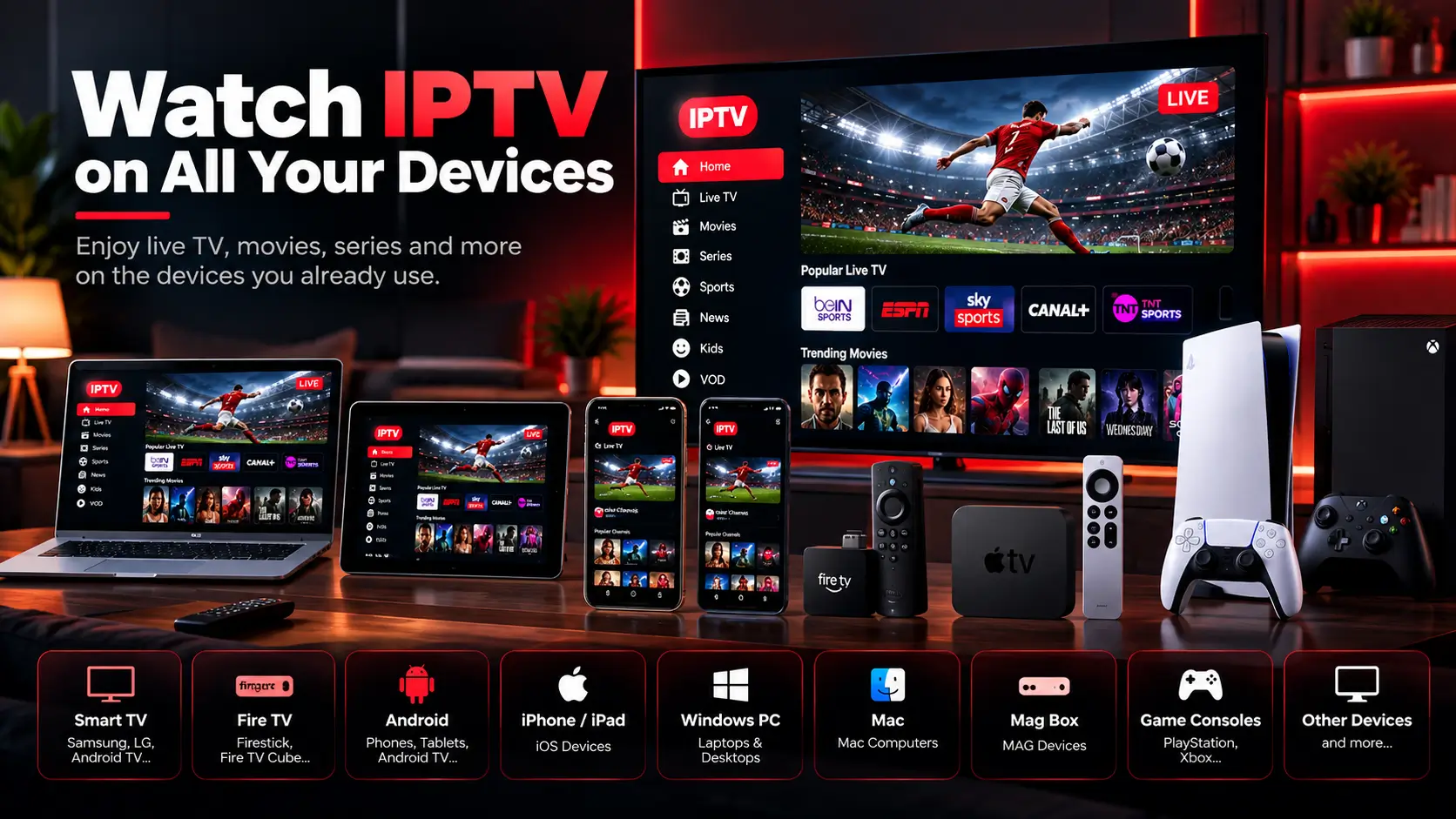
Smart TVs
Many Smart TVs support IPTV applications through their available app platforms.
Fire TV Devices
Compatible Fire TV devices can run supported IPTV and streaming applications.
Android Devices
IPTV applications are available for many Android phones, tablets, and TV devices.
iPhone & iPad
Compatible streaming applications can be used on supported Apple devices.
Windows PC
Computers can use compatible IPTV players and applications for streaming.
Other Devices
Compatibility depends on the application, operating system, and IPTV service.
For a more detailed device guide, visit our IPTV Supported Devices page.
06. How Do You Start Using IPTV?
Once you understand what is IPTV, getting started generally involves choosing a compatible service, selecting a suitable device, and configuring the appropriate application.
Step 1: Choose a Compatible Device
Decide whether you want to watch IPTV on a Smart TV, Fire TV device, Android device, iPhone, iPad, or computer.
Step 2: Choose an IPTV Application
Install an application that is compatible with your device and supports the connection method provided by your IPTV service.
Step 3: Add Your Service Information
Depending on the platform, you may need to enter account credentials, a playlist, or another configuration provided by your service.
Step 4: Start Streaming
After configuration, you can browse the available content and start watching supported channels or on-demand content.
07. IPTV vs Traditional TV
IPTV and traditional television use different methods to deliver content. The main difference is the network used to transmit the video.
| Feature | IPTV | Traditional TV |
|---|---|---|
| Delivery | Internet connection | Cable, satellite, or terrestrial |
| Internet Required | Yes | Not always |
| Device Flexibility | Many compatible devices | Depends on provider |
| On-Demand Content | Often available | Depends on provider |
08. Common IPTV Terms
IPTV
Internet Protocol Television, a method of delivering video over IP networks.
VOD
Video on Demand, allowing viewers to select available video content.
Playlist
A file or URL containing information used by compatible IPTV players.
Streaming
Playing media while data is continuously delivered over a network.
09. Tips for a Better IPTV Experience
Knowing what is IPTV is only the first step. Your actual streaming experience can also depend on your home network and device.
- Use a stable and reliable internet connection.
- Keep your streaming application updated.
- Restart your router if you experience temporary network issues.
- Use a wired connection when possible for compatible devices.
- Close unnecessary applications that may consume network resources.
- Make sure your streaming device has enough available storage and resources.
- Use IPTV services and content that are legally available in your location.
Need Help With IPTV?
Have questions about compatible devices, IPTV setup, or subscriptions? Contact the Global 4K support team.
10. Frequently Asked Questions About IPTV
IPTV stands for Internet Protocol Television. It delivers television and video content through an internet connection instead of relying exclusively on traditional broadcast, cable, or satellite delivery.
IPTV works by delivering digital video streams through an IP network. A compatible application or device receives the stream and displays the selected content.
You generally need a reliable internet connection, a compatible device, a suitable IPTV application, and valid service or content access.
Yes. Many Smart TVs support compatible IPTV applications. Availability depends on the TV operating system, application, and service.
Compatible IPTV applications can allow streaming on supported Android and Apple mobile devices.
Yes. IPTV relies on an internet or IP network connection to deliver streaming content to the viewer’s device.
Conclusion: What Is IPTV?
What Is IPTV? In simple terms, IPTV is a way of delivering television and video content through internet-based networks. It can support live TV, on-demand content, and multiple compatible viewing devices.
Once you understand how IPTV works, the next step is choosing a compatible device and learning how to configure the right application for your needs. Always make sure that the IPTV services and content you use are legally available in your location.